Hemp-derived products differ by extract type, total CBD, serving size, and lab results, so the best way to choose is to read the label and the Certificate of Analysis (COA). Full spectrum, broad spectrum, and isolate are the three main types, and none is best for everyone. This guide gives CBD education in Naples in plain language: each term, how to check a COA, what Florida requires, and what to ask before you buy. Growing In Health Florida in Naples, FL 34119 offers this in store. Hemp products are not medicines, so talk with your healthcare provider first if you take medication.
• Full spectrum keeps a range of hemp compounds and trace THC. Broad spectrum removes THC. Isolate is CBD only.
• A COA shows what a batch contains. Match its batch number to your package.
• More CBD on the label does not mean a better product.
• Florida requires a QR code, a COA, and age 21 or older for ingestible hemp extract.
• Hemp products are not medical treatments. Ask your doctor first.
Hemp labels feel confusing because brands use many terms that mean different things.
If you’ve spent any time looking at hemp-derived wellness products lately, you’ve probably noticed there is a lot to take in. You’ll see terms like full spectrum, broad spectrum, cannabinoids, terpenes, hemp extract, and CBD isolate. For someone who simply wants to understand what they’re buying, all that terminology can make a relatively simple decision feel unnecessarily complicated.
At Growing in Health Florida, I believe good CBD Education Content should make things easier, not more confusing. My name is Hans, and one of the things I enjoy most about working with our customers is taking the time to explain what different hemp-derived products actually contain. You don’t need to become an expert in hemp to make an informed purchase. You just need a basic understanding of the terminology, the differences between products, and what to look for on a label.
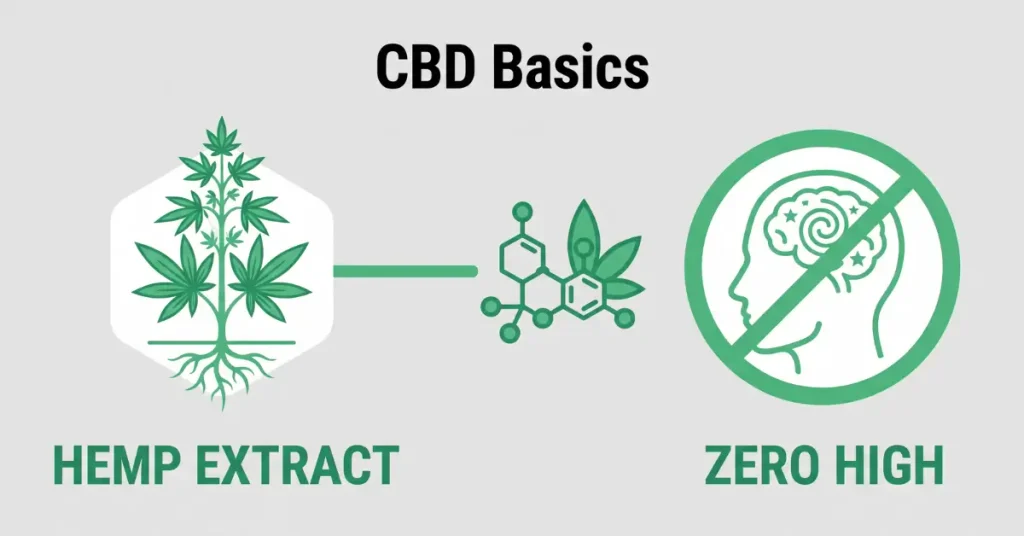
CBD, short for cannabidiol, is a cannabinoid found in hemp that does not cause a high.
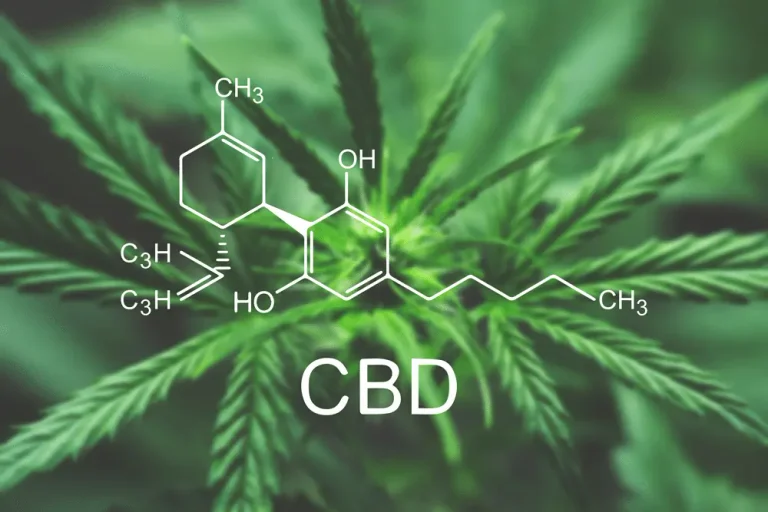
Let’s begin with one of the questions I hear most often: what is CBD? CBD stands for cannabidiol. It is one of the naturally occurring compounds known as cannabinoids that are found in cannabis plants, including hemp. CBD itself does not produce the intoxicating “high” generally associated with THC.
Understanding what is CBD is a useful starting point, but it’s only part of the picture. Hemp contains numerous naturally occurring compounds, which is why two products that both say “CBD” on the front of the package can actually be quite different. This is where quality CBD Education Content becomes especially helpful. Once you know how to recognize those differences, product labels start making much more sense. For a fuller background, read what CBD is.
Hemp-derived only tells you where an ingredient comes from, not what is inside the bottle.
Another common source of confusion is the term “hemp-derived.” It describes where a product or ingredient comes from, but it doesn’t tell you everything about what is actually inside the bottle.
Depending on how a product is manufactured, a hemp extract may contain CBD along with other cannabinoids, terpenes, flavonoids, and additional naturally occurring plant compounds. Other products are processed further to remove certain components. Some contain primarily isolated CBD.
When I provide CBD education Naples Florida customers can use in everyday shopping, I encourage people to look beyond the largest words on the front of the package. The details matter.
Full-spectrum CBD is a hemp extract that keeps a range of the plant’s natural compounds, including trace THC.
One term you’re likely to encounter is full-spectrum CBD. A full-spectrum hemp extract is designed to retain a range of compounds naturally found in the plant. That can include:
• CBD
• Other naturally occurring cannabinoids
• Terpenes
• Flavonoids
• Federally compliant amounts of THC
In Florida, hemp extract may contain no more than 0.3% total Delta-9 THC.
The presence of multiple hemp compounds is the primary distinction to remember when learning about full-spectrum CBD. You may also hear discussions about the “entourage effect,” a theory that compounds within cannabis may interact when consumed together. Research continues into these interactions and their significance.
Good CBD Education Content should also make one point particularly clear: full spectrum does not mean THC-free. That can be an important consideration for some consumers, including those subject to drug testing.
Broad-spectrum CBD keeps several hemp compounds but is processed to remove THC.
Next, we have broad-spectrum CBD. These products also contain CBD and can retain several other compounds found naturally in hemp, but they are processed to remove THC.
This can make broad-spectrum CBD appealing to people who want exposure to a variety of hemp compounds but prefer to avoid THC. However, you should still read individual product information and independent laboratory reports rather than assuming every product labeled “broad spectrum” is identical. That’s a point I emphasize regularly at Growing in Health Florida. Categories are useful, but they don’t replace looking at the actual product.
CBD isolate is highly purified CBD separated from the other parts of the hemp plant.
The third category you’ll often encounter is CBD isolate. As its name suggests, isolate is highly purified CBD that has been separated from the other components of the hemp plant.
Full spectrum has CBD plus other hemp compounds and trace THC, broad spectrum has the compounds without THC, and isolate is CBD alone. For the full breakdown, see full spectrum, broad spectrum and isolate.
| Type | What it contains | THC | Good to know |
| Full-spectrum CBD | CBD plus cannabinoids, terpenes, flavonoids | Trace amounts, within the legal limit | Not THC-free; consider this if you are drug tested |
| Broad-spectrum CBD | CBD plus other hemp compounds | Removed | Check the COA, since products vary |
| CBD isolate | CBD only, highly purified | None added | Simplest profile; no other hemp compounds |
This is exactly why I’m passionate about providing practical CBD Education Content. None of these categories is automatically the best option for every person. Understanding what they mean allows you to make a decision based on your own preferences.
Read the back of the package: total CBD, CBD per serving, extract type, ingredients, and lab testing. Our guide on how to read a CBD label goes step by step.
Once you understand the basic categories, your next step is learning how to evaluate an individual product. The front label is a starting point, but I encourage you to turn the package around and look at the details. Check the ingredient list and serving information. Find out how much CBD is in the entire package and how much is contained in an individual serving.
Useful CBD Education Content should teach you what questions to ask, including:
• How much CBD does the product contain?
• What is the suggested serving size?
• Is it full spectrum, broad spectrum, or isolate?
• What other ingredients are included?
• Where was the hemp sourced?
• Has the product undergone independent laboratory testing?
• Is a current Certificate of Analysis available?
Once you get into the habit of checking these details, comparing products becomes much easier.
A Certificate of Analysis (COA) is a lab report for one batch that lets you check the label against what the lab found.
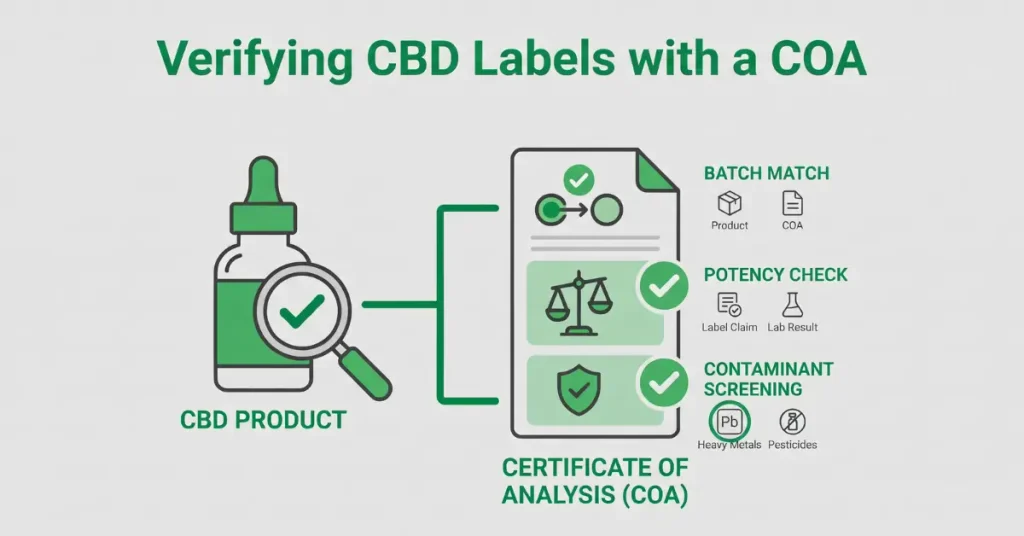
Third-party laboratory testing is one of the subjects I frequently discuss when providing CBD education Naples Florida customers can rely on. A Certificate of Analysis, often shortened to COA, provides laboratory information about a particular product or batch. Depending on the testing performed, it can show cannabinoid concentrations and screening results for certain contaminants. A COA also gives you an opportunity to compare what the laboratory found with what the manufacturer states on the label.
Why it matters: a 2017 JAMA study found only about 31% of CBD products bought online were accurately labeled. To read a COA, check these:
• The lab name, and whether it is independent.
• A batch number and date that match your package.
• The CBD and THC amounts compared with the label.
• Contaminant results, such as pesticides and heavy metals.
At Growing in Health Florida, we believe transparency matters. If you’re going to incorporate a hemp-derived product into your wellness routine, you should be able to understand what you’re purchasing.
Florida requires a lab COA, a label QR code, and a 0.3% total Delta-9 THC limit, and bans ingestible hemp extract sales to anyone younger than 21. Florida Statute 581.217 also calls for the batch number, expiration date, mg per serving, and child-resistant packaging. This is general information, not legal advice.
More CBD on the label does not automatically mean a better product.
Another misconception I occasionally encounter is that more CBD automatically means a better product. It doesn’t work quite that simply. Different products have different concentrations and serving sizes, and people have different reasons for choosing them. A larger number printed on a package may simply indicate that the bottle contains more total CBD.
This is another reason CBD Education Content is more useful than chasing numbers. Pay attention to the total amount, the amount per serving, the type of extract, the ingredients, and the overall quality of the product.
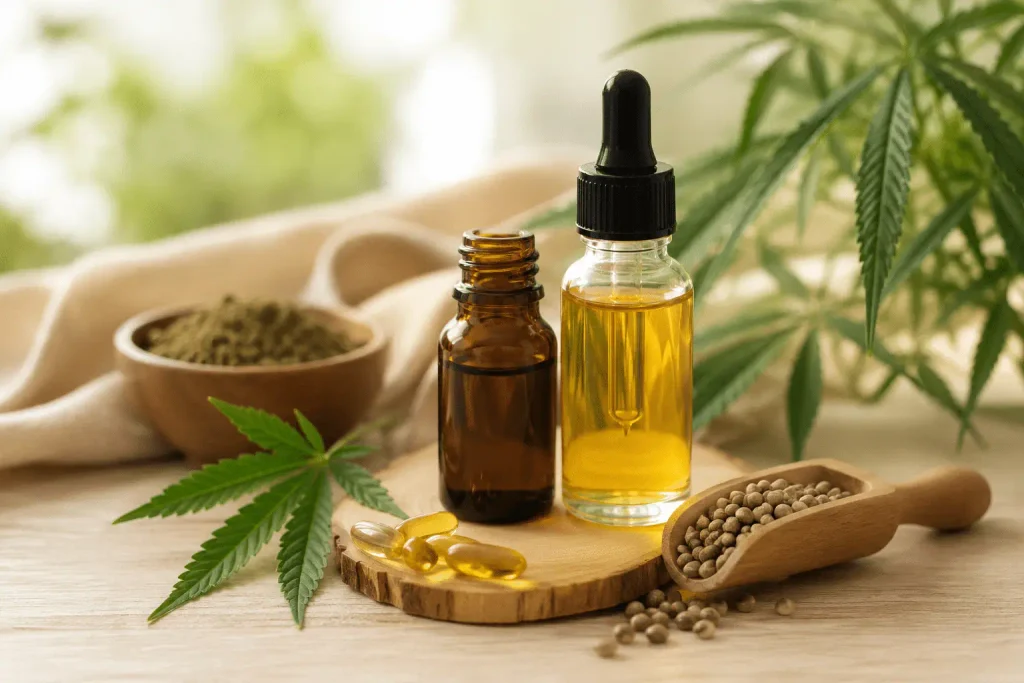
Hemp products come as tinctures, capsules, gummies, and topicals, and the best format is the one that fits your routine. See how gummies, tinctures and topicals fit a routine.
Hemp-derived products now come in many different formats, and each can fit differently into a daily routine. Depending on the products available to you, you might encounter:
• Tinctures and oils
• Capsules and softgels
• Gummies and other edibles
• Topical products
• Other specialized hemp formulations
Rather than choosing a format because it happens to be popular, think about what realistically fits your routine. Someone who prefers a simple, premeasured option may have different preferences from someone who likes using a tincture. The best CBD Education Content gives you information without pretending there is one universal answer.
Hemp products are not replacements for medical care or prescribed treatment.
Education isn’t only about learning product terminology. It also means understanding the limitations of hemp-derived wellness products. CBD products should not be viewed as replacements for appropriate medical care or prescribed treatment. Be cautious when you encounter products marketed with sweeping promises to diagnose, treat, cure, or prevent diseases.
If you take medications, have an existing medical condition, are pregnant or breastfeeding, or have questions about whether CBD is appropriate for you, talk with a qualified healthcare professional. Responsible CBD Education Content should always leave room for those conversations.
The FDA says CBD can cause liver injury, drowsiness, and mood changes, and can interact with other drugs.
A new federal hemp definition is set to take effect on December 11, 2026, counting total THC including THCA. The Congressional Research Service says final products with more than 0.4 milligrams of THC and similar cannabinoids combined per container would be excluded. It does not say how this applies to every product, so check labels and COAs and ask the seller. This is not legal advice.
You do not need to be an expert to shop for hemp products, and asking questions is encouraged.
You don’t need to walk into Growing in Health Florida already knowing the difference between every cannabinoid or extraction process. That’s what we’re here to help explain. In fact, I encourage questions. Ask us about full-spectrum CBD. Ask how broad-spectrum CBD differs. Ask to see laboratory information. Ask how to interpret a label if something doesn’t make sense.
Growing In Health Florida at 7211 Vanderbilt Beach Rd, Suite 3, Naples, FL 34119 offers in-person hemp education, open Monday to Saturday 10 AM to 8 PM and Sunday 12 PM to 5 PM. Browse our hemp wellness products and ask to see lab reports.
Providing approachable CBD education Naples Florida residents can understand is an important part of what we do because an informed customer is in a much better position to decide what belongs in their wellness routine.
Full spectrum CBD keeps a range of hemp compounds, including trace THC within the legal limit. The broad spectrum keeps several compounds but removes THC. Isolate is purified CBD only. None is best for everyone, so read the label and COA of each product.
Yes, in trace amounts. In Florida, hemp extract may contain no more than 0.3% total Delta-9 THC. Full spectrum does not mean THC-free, which matters if you are drug tested. Ask about the broad spectrum or isolate and confirm the THC amount on the COA.
A Certificate of Analysis is a lab report for a specific batch. It can show cannabinoid amounts and contaminant screening. Match its batch number to your package and compare the results with the label, since a 2017 JAMA study found only about 31% of online products were accurately labeled.
No, a higher number may only mean the bottle holds more total CBD. Compare the amount per serving, the extract type, the ingredients, and the lab results instead of the biggest number. Quality and clear information matter more than a high mg count.
Yes, within limits. Florida Statute 581.217 requires a 0.3% total Delta-9 THC limit, a lab COA, a QR code, and age 21 or older for ingestible hemp extract. Federal hemp rules are also scheduled to change on December 11, 2026.
No, hemp products should not replace medical care or prescribed treatment. Be cautious of any promise to cure or treat disease. If you take medications, have a condition, or are pregnant or breastfeeding, talk with a qualified healthcare professional first.
Growing In Health Florida, 7211 Vanderbilt Beach Rd, Suite 3, Naples, FL 34119, offers in-person hemp education. We are open Monday to Saturday from 10 AM to 8 PM and Sunday from 12 PM to 5 PM, and our team can show you lab reports.
Hemp-derived products are easier to choose when you know the three extract types, read the label, and check the COA. Start with the basics, then ask questions and talk with your doctor if you take medication. To ask us anything, call (239) 331-4807 or contact us in Naples, FL 34119. Our team is happy to walk you through any label and lab report, and there is never any pressure to buy. Bring a product you already own, and we will help you make sense of it.
Supporting your wellness journey, naturally,
Hans Doherty, Proprietor.